
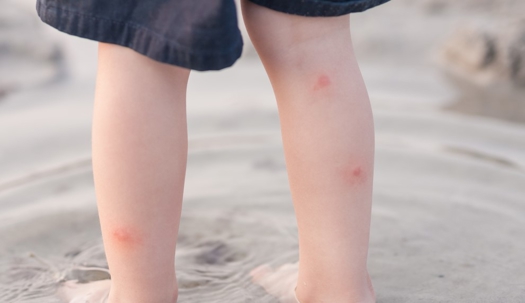
Identifying Bug Bites can be a challenge because of how similar they can feel and appear. Everyone has a different immune reaction to being bitten or stung, so the amount of inflammation and level of severity will vary.
Most bites from common insects will heal quickly and easily, while others may be more painful or require medical care.
These photos and their descriptions can help you identify insect bites/stings.
Bed Bugs

by Hermann Luyken is marked with CC0 1.0
Appearance –several red welts in linear groupings, can be flat or inflamed
Reaction – burning, itchy, sometimes swollen
Location – neck, arms, or torso
Bees

Appearance – pinprick-like red bump or swelling
Reaction – initial sharp pain, stinging, swelling, can trigger a severe allergic reaction in some people
Location – anywhere, especially exposed skin
Fleas

Appearance – similar to bed bugs, small, red bumps in linear clusters
Reaction – very itchy, can become sore or develop a rash
Location – likely on legs or ankles
Mosquitoes
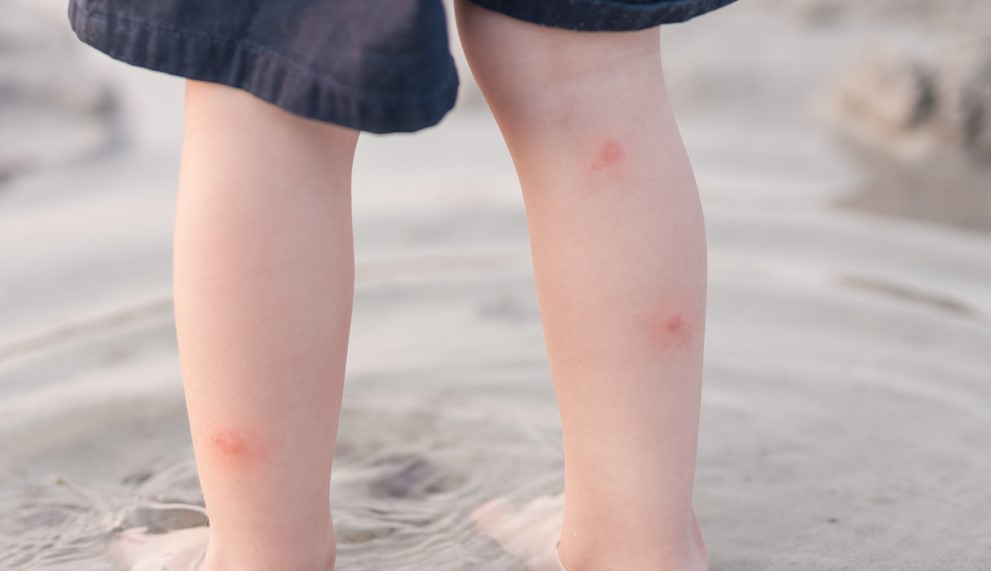
These common bites are annoying but typically heal quickly. They do have the potential to expose you to mosquito-borne disease, so be sure to use bug spray outdoors.
Appearance – puffy, pink, round bump, may have a raised dot in the center
Reaction – very itchy and can sting
Location – anywhere, especially exposed skin
Spiders

"Spider Bites" by chantellervheerden is marked with CC PDM 1.0
Most spiders are nonvenomous, but there are several poisonous varieties to watch for. We’ve included information about bites from the Black Widow (left) and Brown Recluse (right).
Appearance (nonvenomous) – small red marks or welts
Black Widow – one to two bite marks
Brown Recluse – blister, surrounded by a bruised or red area, then fills with blood and ruptures/scars
Reaction (nonvenomous) – pain around the bite, redness, swelling
Black Widow – sharp pain, redness, swelling, cramping in the torso, nausea, sweating anxiety, or muscle weakness
Brown Recluse – little to no immediate discomfort, but pain about an hour later, itchiness, nausea, fatigue, chills
Location – anywhere, especially exposed skin
Here is a resource for more information about dangerous spider bites.
Ticks

Tick bites have the potential to transmit Lyme disease as well as other pathogens through their bites. Use bug spray to prevent these bites, especially if hiking.
Appearance – slight swelling or rash
Reaction – minimal reaction, it can be challenging to know if you’ve been bitten unless you catch the tick on you, see that it has dropped off, or discover a bull’s eye-shaped lesion (above) which is a hallmark symptom of Lyme disease
Location – they seek out warm areas on the body, so they frequently bite in the armpits, behind the knees, or on the head/neck
Fire Ants

“Fire Ant bite” by euthman is licensed under CC BY 2.0
Some ants can bite, some can sting, fire ants do both.
Appearance – red spot that turns into a very itchy white bump
Reaction – immediate pain, redness, swelling, itchiness
Location – likely on legs or ankles
If you’re noticing frequent insect bites while you’re indoors, let us know, and we can help you determine if you’re experiencing an infestation.